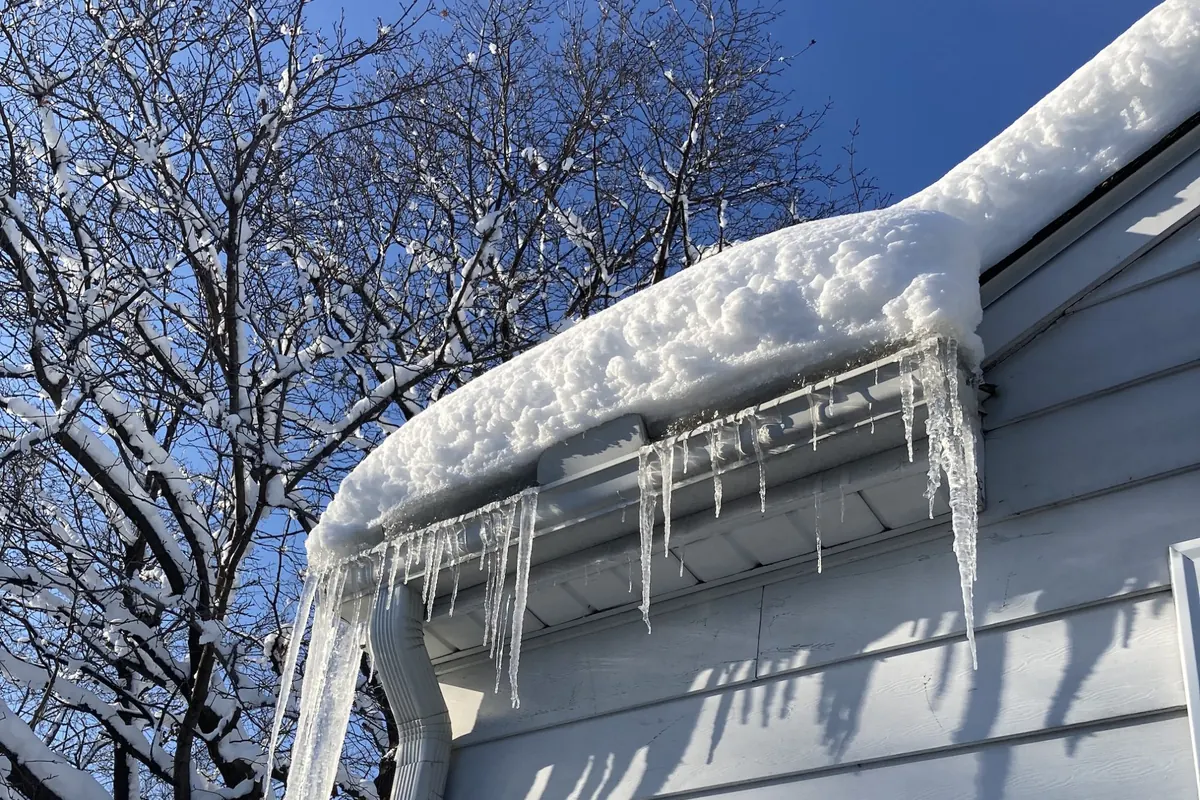
Every winter, ice dams turn small amounts of melting snow into ceiling stains, wet insulation and peeling paint in homes across northern Indiana. They are just as possible further south whenever heavy snow is followed by a stretch of freezing nights. Here is how they work and how to approach the claim.
How an ice dam forms
Heat escaping into the attic warms the roof deck and melts snow from below. The meltwater runs down to the eaves, which sit over the unheated overhang and stay cold, and it refreezes. Over days, a ridge of ice builds at the edge. Meltwater pools behind it, works under shingles and drips into the wall cavity or ceiling.
What homeowners policies commonly cover
Many Indiana homeowners forms cover sudden interior water damage caused by ice dams. The cost of removing the ice itself, or of improving insulation and ventilation, is generally treated as maintenance. Some forms contain specific language about ice dams, so read the water damage and exclusions sections of your own policy.
Documenting the claim
- Photograph the ice at the eaves from the ground, including icicles and the thickness of the ridge.
- Photograph interior stains, wet insulation and any damage to finishes as soon as they appear.
- Note the dates of snowfall and the cold snap that followed.
- Keep receipts for emergency steaming or ice removal and any temporary repairs.
Where the disputes come from
Carriers sometimes argue that ice dam leaks are long-term seepage or the result of poor ventilation. Clear dates, photos of the ice and fresh interior damage help show a sudden event. When coverage is accepted but the repair scope is too narrow, for example a patch of drywall when insulation and multiple ceiling areas are wet, appraisal can resolve the amount.
For more on winter claims, see our ice dam, freeze and snow-load appraisal service page.